
Walthall's Owner-of-Record Card
Walthall County's parcel viewer carries the owner in its OWNERNAME display field and ties that name to parcel and assessment facts. Read the fields as a set. An owner name joined to a deed reference beats a bare name lifted from a search result.
| Owner name | Uppercase owner-of-record field |
|---|---|
| Mailing address | Up to three address lines plus city, state, and ZIP |
| Situs address | Site-address field, which may be blank or incomplete |
| Parcel identifiers | PPIN and structured parcel ID |
| Deed reference | Deed date, book, and page pointers |
| Land context | Acreage, subdivision, legal text, and tax district |
The owner of record is the party the roll carries. An occupant is someone else entirely. Mailing address and situs address also differ. The first is where tax notices go; the second describes where the land sits. Walthall's appraisal guidance notes the office keeps mailing addresses only. It may not locate land by street address alone.
How Current Is Walthall's Owner?
Walthall County assesses land to the owner of record on January 1. That is the county's own rule. A deed filed after that date puts the buyer on the next year's land roll. A gap follows certain closings. The Chancery Clerk may have already recorded a newer deed. Yet the parcel layer can still list the seller. During that gap, the newest recorded deed is the stronger clue to present title. The tax roll still delivers parcel identity, mailing data, value, and district context. Compare the dates instead of calling one office wrong. A sound owner audit logs the deed date, the recording date, and the roll year. It also notes the date the parcel result was viewed.
Recent sales can lag. A Walthall County current owner may not appear on the land roll until the next cycle. Confirm the latest deed at the Chancery Clerk.
A Walthall Owner Record Quirk
One parcel sample shows how these fields combine. It lists PPIN 4260 and parcel ID 110-35-000-06.00. The owner name comes paired with a Seattle mailing address, 39 acres, tax district 3000, and deed book 2025/page 158. It also carries a December 10, 2024 deed date. The legal phrase reads “NW/4 SW/4 LESS RD ROW.” Its situs value reads as zero. That sample is not a universal pattern. It shows why the current owner must anchor to both identifiers plus the deed pointer. A distant mailing address does not move the land. A weak situs field does not erase the legal description. The parcel ID format hints at a section-based scheme. But the county has published no numbering legend. The official parcel-layer source shows the owner and deed fields behind this check.
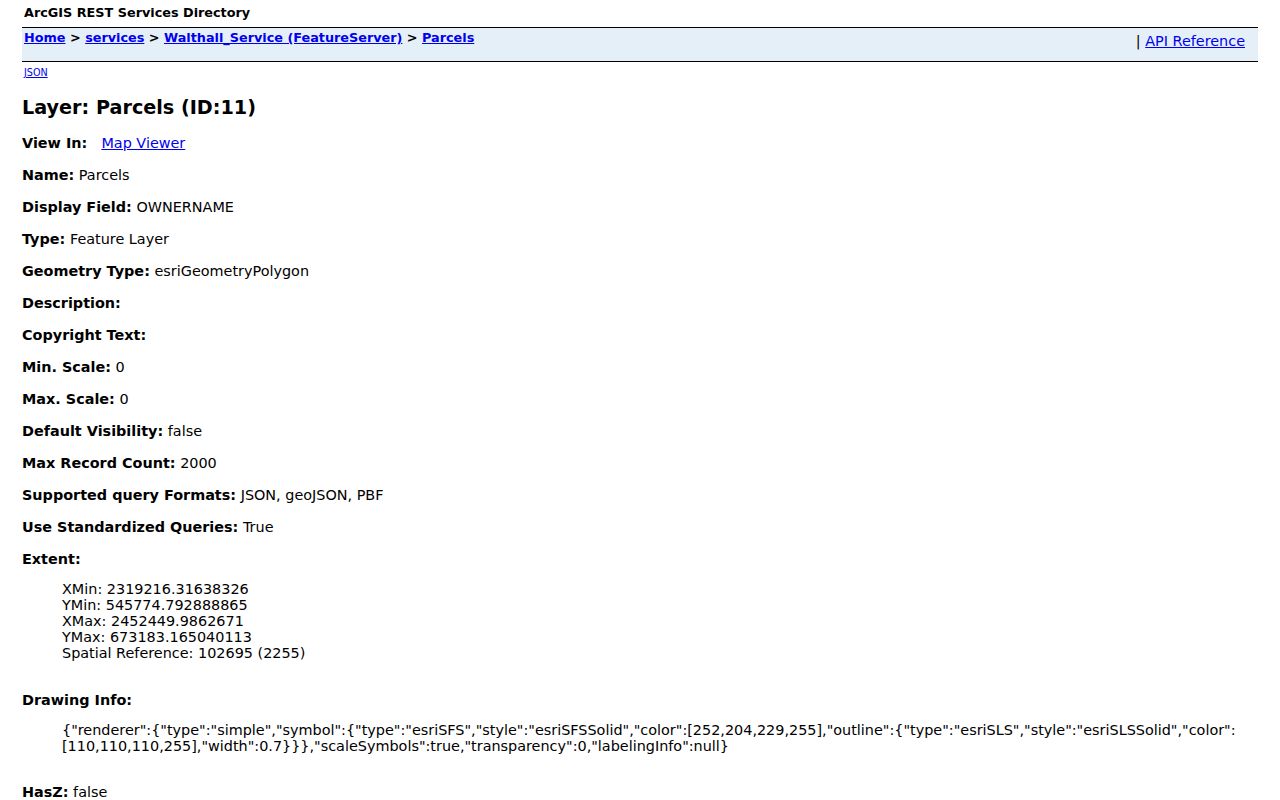
Those fields locate the record; the latest clerk-filed deed confirms it.
Confirm Walthall's Current Owner
Begin with the parcel layer, then turn to the clerk. The county offers no verified public online deed index, so confirming present ownership may take a courthouse visit, a phone inquiry, or a focused written request. Keep the parcel's legal clues close throughout the check.
- Locate the parcel and record its PPIN, parcel ID, owner name, and deed book/page.
- Check whether the roll year could predate a recent closing.
- Ask the Chancery Clerk for the latest deed affecting that exact tract.
- Compare grantee, legal description, deed date, and any prior reference.
- For a business owner, verify the entity through the Mississippi Secretary of State.
- Owner of record
- The party named on the assessment roll.
- Assessment roll
- The annual county list that ties parcels, owners, and values together.
- Situs and mailing
- The land's site clue and the separate address used for notices.
- Recording lag
- The period between a deed filing and its reflection on the roll.
Walthall Business Owners on Record
The current owner field may name a corporation or another entity. Run that exact legal name through the Mississippi Secretary of State Business Search. It supports business name, ID, officer, and registered-agent modes. A registered agent serves as the entity's designated contact. It is not proof of personal ownership of the land. Match the entity name to the deed grantee and its current status. Never substitute an officer's or agent's name for the recorded grantee. The business search may not expose trust details. An estate can require the linked probate or chancery file. Walthall County chancery matters are described locally as not computerized or Internet-accessible.
Walthall Appraisal Cycle Context
The appraisal office reviews about 25 percent of Walthall County each year. That pace produces a four-year full-coverage cycle. That schedule governs appraisal coverage alone. It does not promise every owner name updates on the same timetable. Ownership follows the roll and deed process the county describes. This distinction prevents a common mistake. A newer field inspection or value does not itself prove the displayed current owner. The proof requires a deed filed after January 1. When ownership timing matters, save the roll year and access date.
Walthall Owner Address Mismatches
A Walthall County current property owner can receive tax mail far from the parcel. The listed destination may be corporate headquarters. It may instead be a post office box, an estate representative, or a trustee. Those address fields show where the roll sends notices, not who lives on the tract. The separate situs field should identify the site. Yet it may run sparse. A street search can fail. When it does, hold onto the owner name, PPIN, parcel ID, subdivision, section-township-range, acreage, and deed book/page. Ask the Assessor to reconcile the record rather than inventing a street match. The appraisal office states its maps rest on legal descriptions received from Chancery records. It may not locate land from a street address alone. A Tylertown mailing address warrants one more look. Tylertown is the county's only incorporated town. Still, a Tylertown postal address does not prove the parcel sits inside town limits. Check the city-limit and tax-district fields before drawing that conclusion.
Walthall Owner Access Routes
Walthall County's Parcel Viewer is the main online route for owner clues. The map lets you select a parcel and open its attribute table. You can also adjust columns and export what you picked. One limit matters, though. The viewer is configured with canSearch=false. It offers no owner-name or address search box. Treat it as a map-first tool for property records rather than a lookup engine.
For roll and tax questions, call the Assessor/Collector at 200 Ball Avenue. The numbers are 601-876-4932 or 601-876-4933. The Chancery Clerk sits in the same courthouse. That office keeps the land index for in-person deed research during published weekday hours. Deeds are not online. A newly recorded deed should be viewable by the next business day.
A written public-records request travels best when it names the right custodian. Ask for a specific record, not a general search. List the party name, parcel IDs, deed reference, date range, and legal description. Mississippi law lets the county bill actual costs for search, review, redaction, copying, and delivery. A narrow request is cheaper and easier to verify.
When Walthall's Deed Controls
The parcel owner field and the annual tax roll are administrative records. A deed is different. It is the recorded conveyance that names the grantee and spells out the interest transferred. A January 1 roll may list one party. But a later deed may name another grantee for the same tract. Keep both dates. The gap often reflects the county's stated rule that the roll updates the following year.
Even the newest deed is not a title opinion. A deed of trust, lien, release, probate order, or partition can change the picture. So can an unrecorded claim. The owner-of-record task is narrower than a full title search. Verify that the latest deed's legal description matches the parcel. Then confirm no still-later conveyance sits in the clerk's deed records index.
Contacting a Walthall Current Owner
The tax mailing address is the clearest contact route in the property records. It works best for a property matter. But read it carefully. It may be a post office box, a business office, or a trustee's address. It may even be a distant headquarters. Use it as a mailing clue, not proof of where someone lives. Some qualifying survivors rely on Mississippi's Address Confidentiality Program and a substitute address instead.
Keep any letter tied to the land. Identify the parcel or legal description. State the property issue plainly. Do not publish the owner's information anywhere else. The matter may be a boundary, a title question, a sale, or an estate. That focus serves you best either way. The Walthall County deed records page explains how to obtain the latest recorded instrument.
Lawful use. Public owner data can support a good-faith property inquiry. It must not be used to stalk, harass, intimidate, or harm anyone.